
EU Multiannual Budget 2021-2027: Comments from MEPs
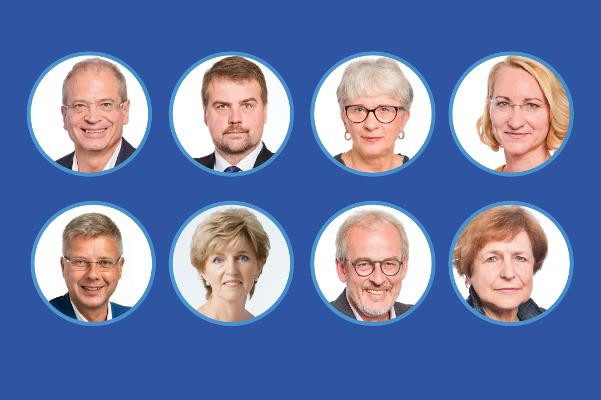
The Bureau of the European Parliament (EP) has compiled the views of the elected Members of Latvia on the multiannual budget of the European Union (EU) in 2021-2027.
On Wednesday, the European Parliament approved THE EU budget for the next seven years, agreed previously by representatives of the Member States. Together with THE EU Renewal Fund - €750 billion, which the European Commission will borrow in financial markets and grant grants to Member States - from 2021 to 2027, €1.8 trillion will be available for EU countries.
Andris Ameriks (Group of the Progressive Alliance of Socialists and Democrats/Honour to serve Riga), Transport and Tourism Committees Vice-President, Petitions committees Member, alternate Industrial, Research and Energy in committee:
I believe that one of the best news in the context of a new budget is this - to get European funding, national governments will have to really start thinking and working “green”. The commitment or promises will not be sufficient, as specific funding is only marked for projects with green course direction. Europe will become much more sustainable and will be a rapid breakthrough of new technologies that will enable the Union's position on the world market to be strengthened.
It is clear that this is likely to be the most financially major EU budget, even despite the withdrawal of Britain from the block and, in the next programming period, the Member States will no longer receive so much money from EU funds. That's the bad news. Today, the whole of Europe is struggling with a pandemic, the consequences of which can not yet be confused and recalculated, so that this budget serves both the development of the Member States and immediate aid. At present, there is a need to focus on the preservation of jobs and the suspension of business activities. The faster the economy can recover from the pandemic, the faster Europe will be able to recover the economic potential.
Ivars Ijabs (political group Renew Europe/development/on!), Special committees on the conduct of cancer Vice-President, Industrial, Research and Energy Member of the Committee, alternate Internal market and consumer protection within the Committee, and In the Economic and Monetary Committee:
The European Semester was adopted after discussions on how to link European funds with the rule of law in the Member States. It is good that this principle, “without the rule of law, is not a European money”, succeeded in agreeing in principle. Unfortunately, the Hungarian and Polish authoritarian leaders succeeded in mitigating this provision and postponing its application for a few years. However, in principle, this is a historic agreement, like the creation of a European post-crisis recovery fund, which increases the total European Union financial amount for the next seven years almost twice. This is important for economic growth in Latvia and it is equally important for European modernisation and solidarity.
Sandra Kalniete (Group of the European People's Party/“ new unity ”), Committee on Foreign Affairs and Special committees on foreign intervention in all democratic processes in the European Union, including disinformation Member, alternate International trade within the Committee, and Security and Defence in the Subcommittee:
The adoption of the multiannual budget, despite the long discrepancies and difficulties that accompanied the budgetary process, shows the ability of EU Member States to reach an agreement. However, the attempt by some countries to block the adoption of the financial package because of their internal political objectives was irresponsible. This multi-annual budget, together with the resources of the Recovery Fund, will serve as a catalyst for overcoming the crisis after the pandemic, while it builds on the idea that future EU countries should be better prepared for unexpected crisis situations. More than eur 10 billion has been invested in the Latvian economy from EU funds for the next seven years, and it is crucial that these funds be invested intelligently in order to raise Latvia's competitiveness at a higher and more sustainable level.
Dace Melbarde (European Conservative and Reformist Group/National Association for “All Latvia!” - “For the Land and Freedom/LNNK”), Cultural and educational committees and Special committees on foreign intervention in all democratic processes in the European Union, including disinformation Vice-President, alternate In the Committee on the Environment, Public Health and Food Safety and In the Committee on Industry, Research and Energy:
It is welcome that, after long struggles and persistent pressures on Parliament's cultural and educational programmes, the creative Europe and Erasmus + are an increased budget. I am particularly pleased that the media is first marked with concrete support for the creative Europe and, on my own initiative, a “NEWS” or “NEWS” initiative will be launched. This initiative includes a pilot investment project with private partners, access to loans supported by investment EU guarantee, grants and support to industry through participation in other EU programmes.
I am pleased that some of the media will also be the proposal i have submitted – a pilot project for digital transformations of local and regional media IN THE EU Member States. It provides help for local media to develop digital technologies, skills and business models suitable for digital environment. I hope that this pilot project, which is planned for one million euros in the first year, will show its potential and will eventually become part of THE EU's permanent support.
Nils Ushakov (Group of the Progressive Alliance of Socialists and Democrats in the European Parliament/“ Coordination ”Socialist Democratic Party), Budget committees Member, substitute In the Committee on Foreign Affairs:
Firstly, Europe was able to negotiate and adopt a unique decision on a record budget for the next 7 years. This gives us all hope that Europe will be able to successfully overcome the consequences of this crisis without losing other programmes that are equally important for Europe. This is what Europeans from Lisbon and Riga now expect from THE EU.
Secondly, THE EU did not return to the blackmail of Hungarian and Polish-based conservative governments. And as from 1 January 2021, by managing European money, the European Commission will be able to penalise countries that violate the principles of legality. Among other things, it is a signal to the Latvian government, which is also not always able to ensure the most efficient allocation of funds from European funds. And, Thirdly, this budget is extremely beneficial for Latvia. More than €10 billion in grants rather than loans. If the Latvian authorities are able to use these funds more reasonably than usual, it will provide enormous additional development opportunities to our country.
Inese Vaidere (Group of the European People's Party/“ new unity ”), Committee on Economic and Monetary Affairs Member, alternate In the Committee on the Environment, Public Health and Food Safety:
We have approved an EU multi-annual budget for Latvia, as we will receive more than eur 3.6 million for each euro paid back. EU funds will enable us both to recover from the virus crisis and to address important issues in the long term: to implement the European Green course and digital technologies, modernise businesses, renovate buildings, strengthen security. I would also like to stress that THE EP's heavy negotiations with Member States successfully managed to increase the budget. The additional €16 billion of science, youth, entrepreneurship support programmes will help many in Latvia. I particularly highlight the fact that THE EP tripled funding for a new European Health Fund, which i have worked on. This programme with more than €5 billion will allow Latvian citizens to make treatment more accessible in other countries, as well as to start reducing prices for medicines. However, an unfair budget will continue to be a direct amount of direct payments to Latvian farmers, which, although growing, will not reach THE EU average.
Roberts Zīle (European Conservative and Reformist Group/National Association for “All Latvia!” - “For the Land and Freedom/LNNK”), Committee on Economic and Monetary Affairs, Transport and Tourism Committees and Tax Subcommittees Member, alternate In the Committee on Budgets:
While the crucial budget for EU recovery will be the climate support mark, the implementation of which will be challenging for Latvia, however, the increase, despite being discriminated against others, has been fought for direct payments by Latvian farmers. Moreover, if the overall “flame” of the multiannual budget is seen in the context of THE EU recovery and recovery money, the increase is also expected for our cohesion policy, especially during the first stages of the Seven. At the same time, the European Connecting Instrument advocated under this budget will be a guarantor for the development of Rail Baltica. In the long term, the question remains the inclusion of new taxes in the total EU budget pot in the form of own resources through which THE EU will have to cover the total EU recovery money borrowing.
Tatjana Ždanoka (Group of the Greens/European Free Alliance/Russian Union of Latvia), Petitions committees Vice-President, Committee on Employment and Social Affairs Member, alternate In the Committee on Fisheries:
I welcome the positive political agreement on THE EU's multiannual budget, in particular the rule of law, which means that EU countries that do not respect the rule of law will risk losing access TO EU funding.
The agreement reached on THE EU's multiannual budget is particularly important in circumstances where Covid-19 has caused a unprecedented crisis with catastrophic consequences for many workers and businesses. A determined response is required, in particular to the effective management of the second wave of Covid-19 and the entire pandemic.
It is regrettable that the Council is creating unnecessary delays in the adoption of the whole package, including the new EU programmes from 2021 to 2027.
Source: www.europarl.europa.eu