
Vecsloboda castle mound
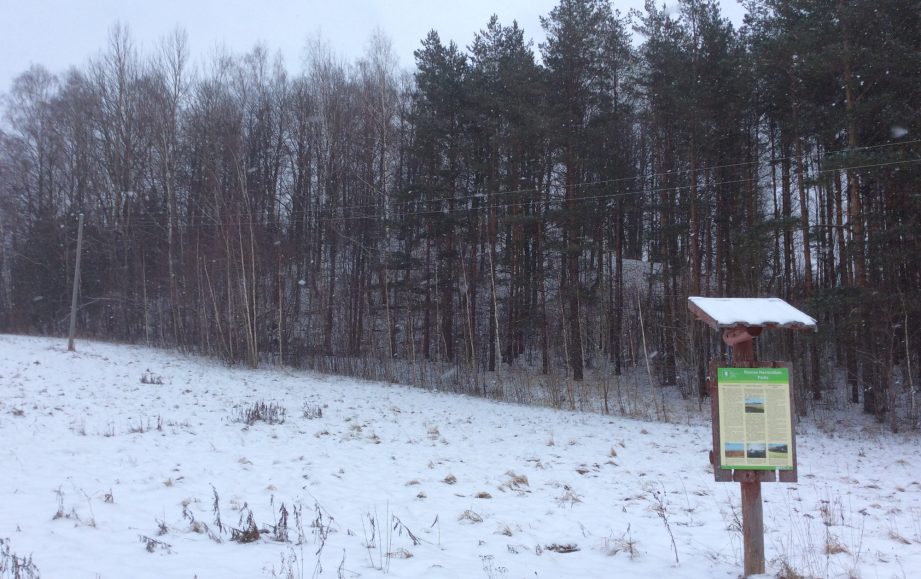
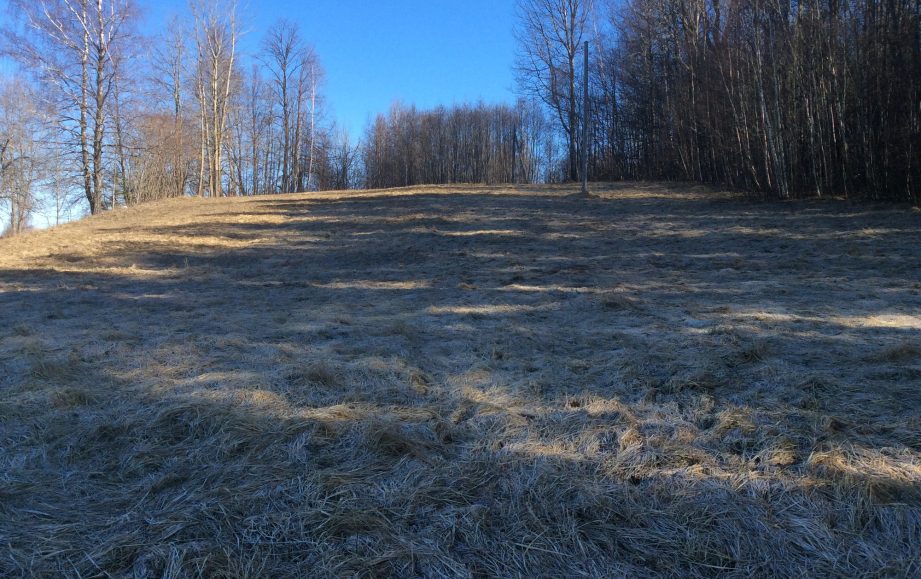


The castle mound (222.8 m above sea level) is considered one of the most ambitious defensive structures of its time in Latvia and was inhabited as early as the second half of the 1st millennium AD.
Near the village of Vecsloboda, approximately 2 km from the Kaunata Catholic Church, between the Stoļerova and Rogaiža roads, stands the mighty Vecsloboda hillfort, which rises about 40 m above the nearest surroundings. The hillfort was inhabited by Latgalian tribes in the 10th century. The hillfort's protective rampart and moat have survived to this day. A wide and scenic view opens from the hillfort. The hillfort is located on the dominant highland in the area, which rises 40 m above the surroundings and 222 m above sea level. The fortifications were built on a hill oriented in the NE - SW direction, whose E, S and W slopes are particularly steep. A rampart and moat were built at the flatter NE end, which further turn into a terrace on the slopes of the hillfort, which encloses the entire hillfort. The leveled plateau of the hill with a diameter of 40-50 m has a slight slope to the NE. The mound has a distinctly black cultural layer, in which sherds of rimless and rimmed vessels have been found as isolated finds. The finds indicate that the mound was inhabited in the second half of the 1st century AD and the first centuries of the 2nd century AD. There are several ancient graves in the vicinity of the Vecsloboda mound.
| Address | Vecsloboda, Kaunatas pagasts, Rēzeknes novads |
| Coordinates | 56.3425; 27.5785 |