
Blacksmith Jānis Lubka


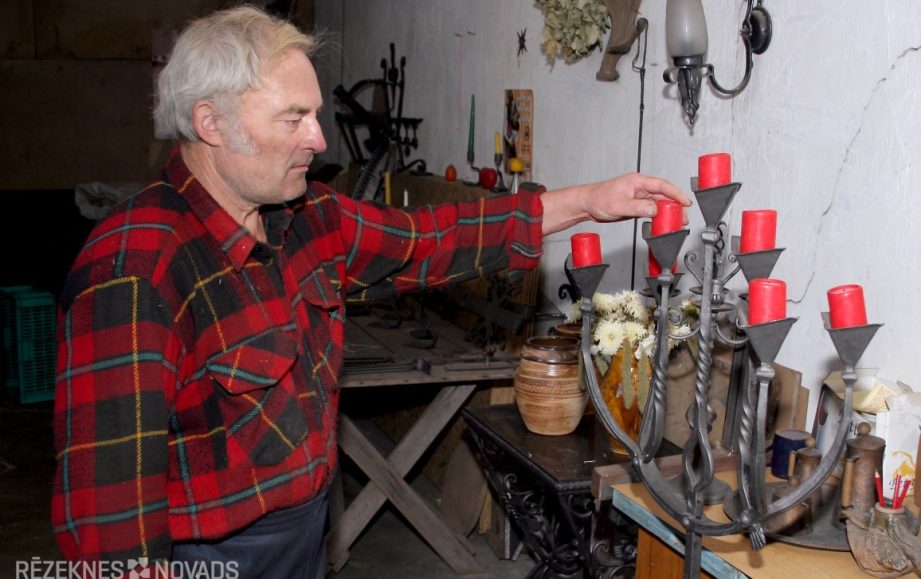


Inspection of the workshop. Providing metalsmithing skills. Sale and manufacture of products to order. Metalworking.
The artist builds metal works in ethnographic Latvian style and continues the old Latvian mining traditions. Visitors can kill a nail or a hook themselves.
Jānis Lubka was born on 17 April 1942 in Ludza District Nautrēni. The family has 4 children, Jānis – the oldest; he has inherited his grandfather – a master with gold hands – working skills and mother – a chuckle. There is also a taste of taste and beauty from his mother. Jānis birthday memories - his pedantic and hardworking grandfather - the Mikitāns-blacksmith - the heavy boy in the heat of the smoke, is called, “boy, blowing!” In his childhood, his feelings in the world relate to his life as an exciting circus show, a man, a fire and a metal toy. As a result, he turned to the teaching and creative activity of the blacksmith and decided to associate himself with the artistic 20th of metal. In the early sixties, Jānis went to study at the 17 th art secondary school of Rīga.
Until 1992, Jānis Lubka worked in Riga, where for many years he directed the folk art studio "Zīle." The studio’s mission was to cultivate the craft skills of metalworkers—masters of traditional folk arts—as well as to study folk ornamentation and accumulate knowledge of folklore and ethnography. Jānis’s metalwork encompasses a variety of functional objects, including bracelets, clocks, candlesticks, flower stands, mirrors, coat racks, and chairs. Admirers of his work note that the "restrained" black metal he uses can blossom into lifelike leaves and flowers, or unfurl into intricate, delicate lines. He developed his distinctive style—evident in his refined mirror frames, coat racks, and striking candlesticks—by studying traditions passed down through generations of folk art masters and by incorporating his own creative innovations.
The first Jānis Personal Exhibition was held in 1984 at the Museum of Freedom, followed by many others, with popularity also coming out of Rīga, namely the native Latgale side and elsewhere – his darts are seen among the exhibitions of any larger People's applied art exhibition. They are also displayed in Poland, Russia (Moscow), Germany, Finland, Japan, Poland.
Jānis Lubka has received numerous commendations and certificates of honor for his significant contribution to the development of folk art, his creative artistic achievements in metalwork, and his preservation of an authentic Latvian spirit. His exploration of Latvian folk ornaments and his study of ethnographic and archaeological materials sparked a deep interest in Jānis regarding the historical journey and destiny of his people.
On the other side of the 80 s, as the People's Third Woke began, Jānis became a witness and active participant in many historical events. Following the restoration of independence of Latvia, in August 1991, Jānis believed that the time of joint stock went into history and that every fighter for restoring our country's independence should contribute to further development of the country. He belonged to those people who were delighted by the idea of reviving Latvian countryside to the belief that he had to play on the dungeon land. His mother had constantly called Jānis to return to his home, but at that time it was important for him to survive the country's important and historic events.
In his mother's home, Jānis returned in 1992, took over the land of his grandfather, becoming a farmer. The housekeeper, with his spouse, who has found himself in the countryside, grows and sells vegetables. In order not to leave the neglected hobbies (as Jānis himself calls his foundry), he made a workshop on his home side in Green Manor, the old cultural house. Jānis acknowledges that less time is left for land management, more transferred to his post. He can't complain about the guests in his workshop, his work fan and the enlightenment are missing.
Jānis also actively collaborates with local fiction masters and produces exhibitions with them. He himself acknowledges that the greatest work of life is Rogovka's 200-year-old monument, located in the centre of the village.
Gan Jāņa Lubkas kaimiņi, gan citi Nautrēnu pagasta iedzīvotāji uzskata meistaru par Latvijas patriotu un godavīru, dzīvesgudru zemnieku ar mākslinieka dvēseli.


| Address | Zaļmuiža, Nautrēnu pagasts, Rēzeknes novads |
| Coordinates | 56.7351211; 27.3818710 |
| Phone | +371 29111736 |